Health risks of a sewage backup and how to handle it safely
By Lena Vogel · Updated 2026-06-15
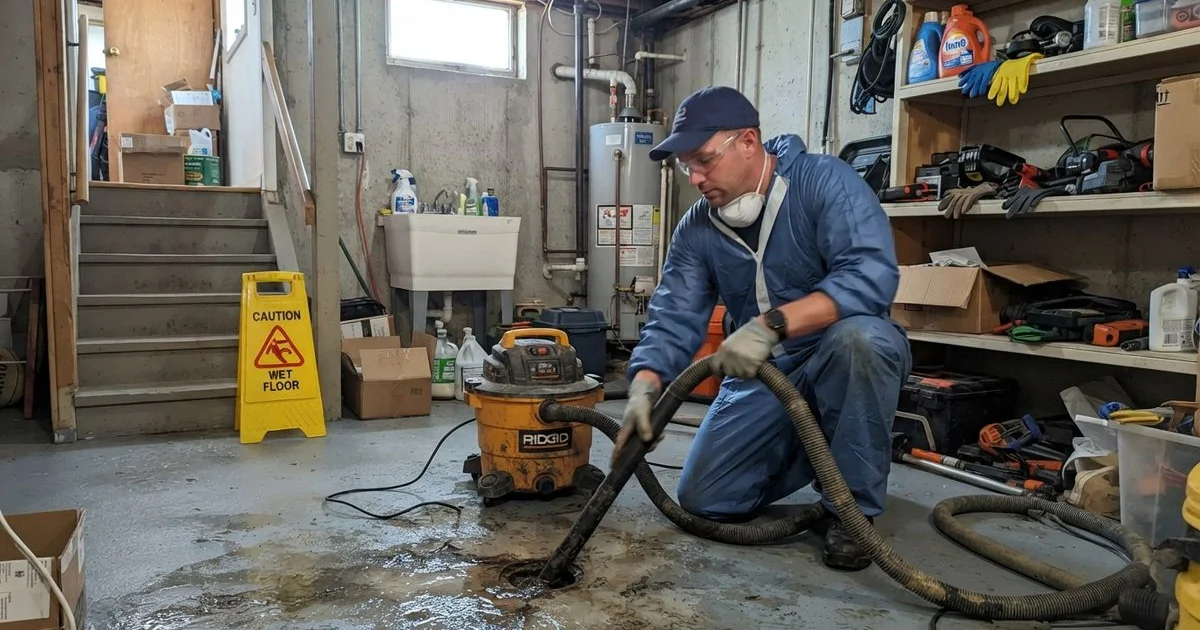
A sewage backup is one of the few plumbing problems that’s a genuine health issue, not just property damage. This is general safety information, not medical advice; if anyone in your household develops symptoms after exposure, contact a medical provider.
Why it’s dangerous
Raw sewage carries bacteria, viruses, and parasites capable of causing gastrointestinal illness, skin infections, and eye or respiratory irritation. Contact doesn’t have to be direct, standing water, contaminated surfaces, and even airborne particles from a dried spill can carry risk. Children, older adults, pregnant individuals, and anyone with a weakened immune system are more vulnerable to these exposures than a healthy adult, so it’s worth being especially cautious about who enters the affected area while it’s being addressed.
What to do immediately
Stop using water in the home, since more water flowing into a backed-up system can make the overflow worse. Keep people and pets away from the affected area entirely rather than trying to work around it. If the backup is in a finished living space, avoid walking through standing water without protection, and don’t touch contaminated surfaces with bare skin. If the backup reaches an area with electrical outlets or a heating system component, treat that as an additional hazard and avoid the area until it’s been assessed.
Table: what’s usually salvageable
| Item type | Usually salvageable | Usually not |
|---|---|---|
| Hard, non-porous surfaces (tile, sealed concrete) | Yes, with proper cleaning and disinfection | No |
| Carpet and carpet padding | No | Yes, typically discarded |
| Drywall that absorbed contaminated water | No | Yes, typically cut out and replaced |
| Upholstered furniture | No | Usually, depends on extent |
| Non-porous, sealed containers and hard plastics | Yes | No |
Cleanup: what’s safe to do yourself
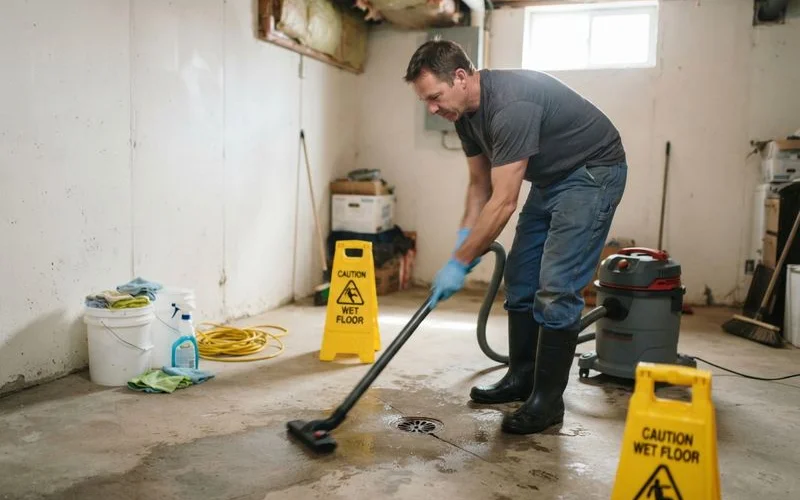
A very small, contained spill on a hard surface can reasonably be handled with gloves, eye protection, and a disinfectant labeled for sewage or bloodborne pathogens. Anything beyond that, standing water, contact with carpet or drywall, or a backup affecting more than a small area, is safer left to a professional with the right protective equipment and extraction tools. Ventilate the space as much as possible while it’s being addressed, and wash hands thoroughly after any contact.
Two different jobs: plumber and restoration
A backup usually needs two separate fixes. A plumber diagnoses and clears the cause, whether that’s a clog, a collapsed line, or a drain cleaning issue further down the system. A water damage restoration specialist handles the safe removal, drying, and disinfection of anything the sewage touched. Skipping the second step because the water is “gone” is a common mistake, since contamination and moisture can linger in materials long after the visible water is cleared.
Trying to save money by skipping the restoration step is usually a false economy. Lingering contamination in a subfloor or wall cavity doesn’t announce itself the way standing water does, and it can keep causing odor and health complaints long after the visible cleanup looks finished. If a company offers only the plumbing fix and tells you the rest is optional, ask specifically why, since that’s not typically how a genuine sewage contamination event should be handled.
After the immediate cleanup
Once the backup is cleared and the affected materials are addressed, ask your plumber what caused it and whether it’s likely to recur. A one-time event, like a large object flushed by mistake, is different from a recurring backup tied to tree roots, an aging line, or a structural issue in the sewer pipe. If it’s happened more than once, a camera inspection of the line is worth the cost to understand what’s actually going on before it happens again. Our guide on what to expect during a drain cleaning or sewer service visit walks through what that appointment typically involves.
Our ranking method rates local providers on responsiveness and thoroughness, both of which matter more than usual with a health hazard on the clock. You can find plumbers and restoration specialists through our directory to get both parts of the job handled properly.
FAQ
- Is it safe to clean up a small sewage backup myself?
- For a very small, contained amount, wearing gloves and using disinfectant can be reasonable. Anything larger, or involving carpet, drywall, or standing water, is safer left to a professional with the right equipment.
- What health risks does sewage backup actually carry?
- Raw sewage carries bacteria, viruses, and parasites that can cause gastrointestinal illness and skin or eye irritation on contact. Children, older adults, and anyone with a weakened immune system face higher risk from exposure.
- Should I throw away items that got wet from sewage?
- Porous items like carpet, upholstered furniture, and drywall that contacted sewage water are generally not salvageable and should be discarded. Hard, non-porous surfaces can often be cleaned and disinfected.
- Do I need both a plumber and a restoration company?
- Often yes. A plumber clears the cause of the backup, while a water damage restoration company handles safe cleanup, drying, and disinfection, since those are different skill sets and different equipment.