What to expect during a drain cleaning or sewer service visit
By Lena Vogel · Updated 2026-06-04
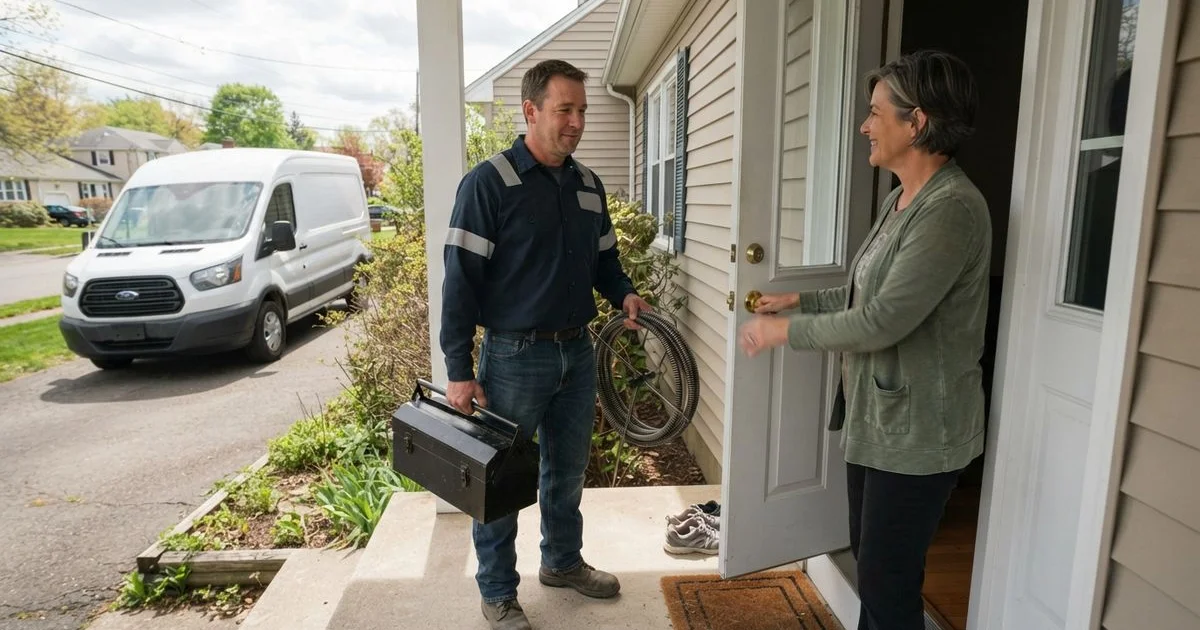
A clogged drain visit follows a fairly predictable pattern once you know what to expect, which makes it easier to judge whether the plumber in front of you is doing a thorough job or rushing through it.
Step 1: describing the problem
The plumber starts by asking what’s happening: which fixture is affected, how long it’s been going on, whether it’s a slow drain or a full backup, and whether it’s happened before. A recurring clog in the same spot is a different problem than a first-time slow drain, and that history shapes what they check first. It’s worth being as specific as you can here, since details like “it’s slower after we do laundry” or “it backs up in the shower when the washing machine drains” can point directly at a shared line issue rather than a problem isolated to one fixture. If what’s coming back up is actual sewage rather than plain water, treat it as a health hazard until the plumber arrives, not just an inconvenience.
Step 2: diagnosis
For a single fixture, this is often quick, a visual check and a test run of water. For a suspected main line issue, a plumber may recommend a camera inspection before touching anything, since a camera shows exactly where the blockage is and what’s causing it, whether that’s grease buildup, tree roots, or a structural issue like a collapsed or offset pipe. Skipping this step on a main line problem often means guessing at the method, which can mean paying for the wrong fix.
A plumber who jumps straight to snaking a main line without asking any of these questions first isn’t necessarily wrong, sometimes a straightforward clog is exactly what it looks like, but it’s worth noticing whether they’re diagnosing or just reacting.
Step 3: clearing the line
The method depends on what the diagnosis found:
- Snaking for a straightforward clog in a fixture drain or an accessible section of pipe.
- Hydro jetting for grease buildup or a main line that needs a full scouring, not just a punched-through path.
- Camera-guided snaking when the clog’s exact location and cause need to be confirmed before or during the clearing.
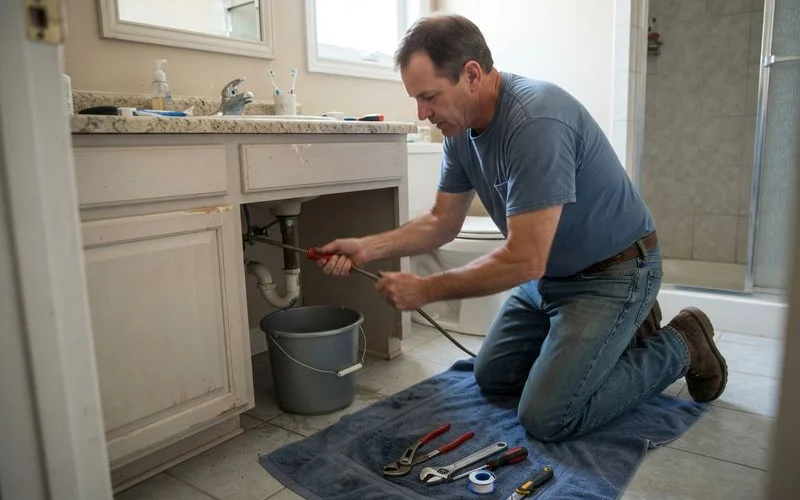
Table: what drives the approach
| Situation | Likely method | Typical time |
|---|---|---|
| Single slow-draining sink or tub | Standard snaking | 30-45 minutes |
| Fully blocked fixture drain | Snaking, possibly hydro jetting | 45-90 minutes |
| Recurring main line backup | Camera inspection + snaking or jetting | 1-3 hours |
| Suspected tree roots or grease buildup | Hydro jetting | 1-2 hours |
Step 4: confirming it’s clear
A thorough plumber runs water or flushes the fixture after the work to confirm the line drains properly, not just that the immediate blockage is gone. For a main line job, they may re-run the camera to show you the cleared pipe. This step matters: a clog that seems gone right after snaking can return within days if the underlying cause, like a partial root intrusion, wasn’t addressed.
What a recurring clog usually means
If the same drain has clogged more than once, ask the plumber to look past the immediate blockage for a root cause rather than clearing it the same way each time. Recurring clogs in the same spot often point to something structural: a low spot in the pipe called a belly, a partial collapse, or roots that have worked their way into a joint. A camera inspection is the only reliable way to confirm which of these is happening, and it changes the recommended fix considerably, from a routine snaking to a targeted repair of the specific section of pipe.
Questions worth asking
Ask what caused the clog, not just how it was fixed, since that tells you whether it’s likely to recur. If a camera inspection reveals a bigger structural issue, ask for a clear explanation and a separate written estimate rather than agreeing to added work on the spot. Our ranking method weighs how thorough local providers are with diagnosis, not just how fast they clear a line, which is worth checking before you book. You can browse drain cleaning providers in Greater Hartford through our directory to compare recent customer experiences before your appointment.
FAQ
- How long does a typical drain cleaning appointment take?
- A single fixture clog often clears within 30 to 60 minutes. A main line clog, especially one that needs a camera inspection or hydro jetting, can take a couple of hours.
- Will the plumber need to cut into a wall or floor?
- Rarely, for a standard clog. Most drain cleaning is done through an existing cleanout or fixture opening. Cutting in is usually only needed if there's no accessible cleanout and the blockage is severe.
- What's the difference between snaking and hydro jetting?
- Snaking uses a flexible cable to break up or pull out a clog. Hydro jetting uses high-pressure water to scour the full width of the pipe, which clears grease and buildup that snaking can leave behind.
- Do I need to be home for the whole appointment?
- Usually yes, especially for a main line job, since the plumber may need you to run water or flush a fixture to confirm the line is clear before they leave.