What to expect from a furnace repair appointment in Greater Hartford
By Lena Vogel · Updated 2026-06-18
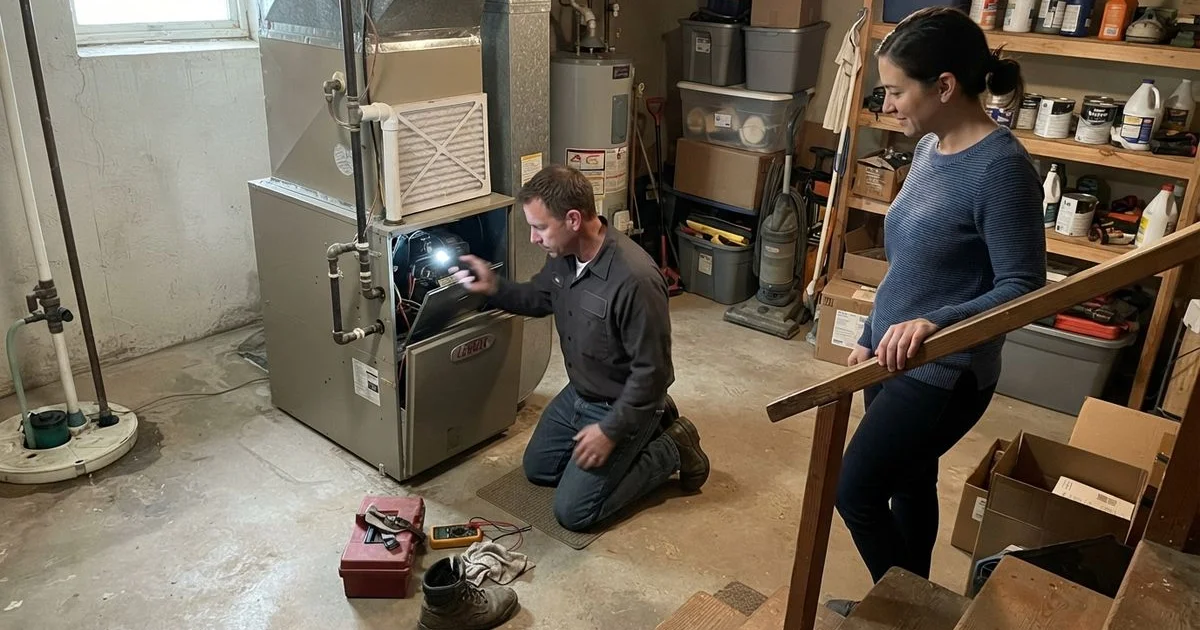
Furnace trouble tends to show up at the worst time, usually during a cold snap, which makes it worth knowing what a proper repair visit should look like before you’re relying on one.
Step 1: describing the problem
The technician starts by asking what you’re experiencing: no heat at all, inconsistent heat, strange noises, a burning smell, or the system cycling on and off too often. Be specific about when it started and whether anything changed recently, like a thermostat replacement or recent maintenance, since that context often points directly at the cause. If you noticed anything unusual leading up to the failure, a smell, a sound, a spike in your utility bill, mention it even if it seems unrelated, since it can rule out or confirm a cause faster than starting from scratch.
Step 2: diagnosis
A thorough technician checks more than the symptom you reported. That typically includes the thermostat connection, the ignition system, airflow through filters and ducts, and safety controls like the limit switch. Skipping this broader check in favor of replacing the first obvious part is a common shortcut that sometimes means you’re back to square one within weeks.
Table: common issues and what they usually involve
| Symptom | Common cause | Typical fix complexity |
|---|---|---|
| No heat, no fan running | Thermostat, power, or ignition failure | Low to moderate |
| Fan runs, no heat | Ignition or gas valve issue | Moderate |
| Furnace cycles on and off frequently | Dirty filter, airflow restriction, or thermostat issue | Low |
| Strange noise or burning smell | Motor, belt, or electrical issue | Moderate to high |
| Inconsistent heat between rooms | Ductwork or airflow imbalance | Moderate |
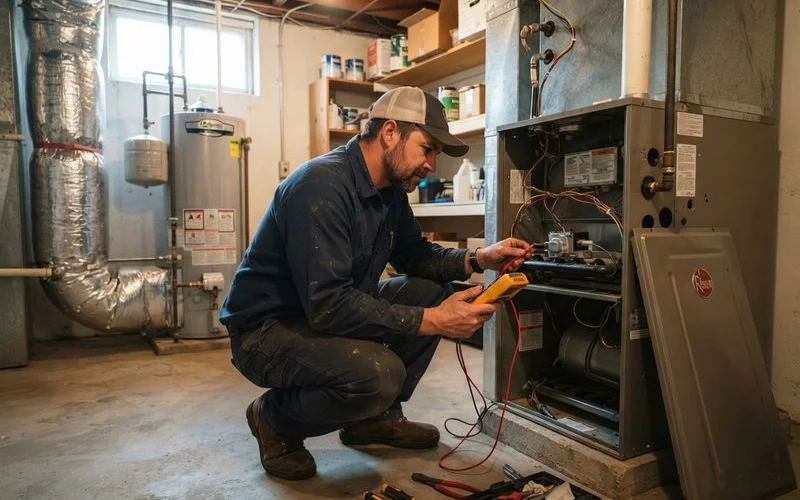
Step 3: the repair
Once the cause is confirmed, the technician explains what’s needed and, ideally, gives you a price before starting work rather than after. Some parts are on the truck and can be replaced same-visit; others, especially for older or less common furnace models, may need to be ordered, which means a temporary fix or a follow-up appointment. Ask directly how long a part order typically takes and whether there’s a way to stay warm safely in the meantime if the furnace can’t run at all.
Step 4: a final check
Before leaving, a good technician runs the system through a full heating cycle to confirm the fix holds, not just that it starts. They should also walk you through what caused the issue and whether it points to a bigger concern, like an aging unit nearing the end of its useful life, or a small underlying problem worth watching.
When repair turns into replace
Sometimes a diagnosis surfaces a harder decision: repair the current unit or start planning for a replacement. A furnace nearing the end of its typical lifespan, or one that’s needed several repairs in a short span, often makes replacement the more sensible long-term choice, even though it’s the bigger upfront cost. A technician who’s willing to walk through that tradeoff honestly, rather than pushing either option automatically, is worth paying attention to. Ask for the estimated remaining lifespan of the current unit and how the repair cost compares to a realistic replacement estimate before deciding.
Getting the most out of the visit
Ask what routine maintenance would help prevent a repeat of the issue, since many furnace failures trace back to a dirty filter or skipped annual service. If the technician recommends a part or repair you don’t understand, ask them to explain it in plain terms before agreeing, and get the price in writing before work starts rather than after it’s done. That same habit, ask questions, get it in writing, is worth carrying into any other service call, like a drain cleaning or sewer service visit.
This directory’s ranking method weighs how clearly local providers communicate and how well they stand behind their work, which is worth checking before you book a furnace repair appointment. Our directory can help you compare Greater Hartford providers before the next cold snap arrives, rather than searching under pressure once the heat is already out.
FAQ
- How long does a furnace repair appointment usually take?
- A straightforward fix, like a replaced igniter or a cleaned sensor, often takes 30 to 60 minutes. A more involved repair, like a blower motor or heat exchanger issue, can take a couple of hours or need a follow-up visit for parts.
- Will the technician diagnose the whole system or just the immediate problem?
- A thorough visit checks the system as a whole, airflow, ignition, safety controls, not just the symptom you called about, since related issues often share a root cause.
- Should I expect a diagnostic fee separate from the repair cost?
- Many companies charge a diagnostic or trip fee that's separate from parts and labor, sometimes credited toward the repair if you proceed. Ask about this before the appointment so it isn't a surprise.
- What should I do before the technician arrives?
- Clear access to the furnace, note when the problem started and any unusual sounds or smells, and check that your thermostat has working batteries, since that's a common false alarm.