Leak detection: DIY methods vs professional equipment
By Lena Vogel · Updated 2026-06-29
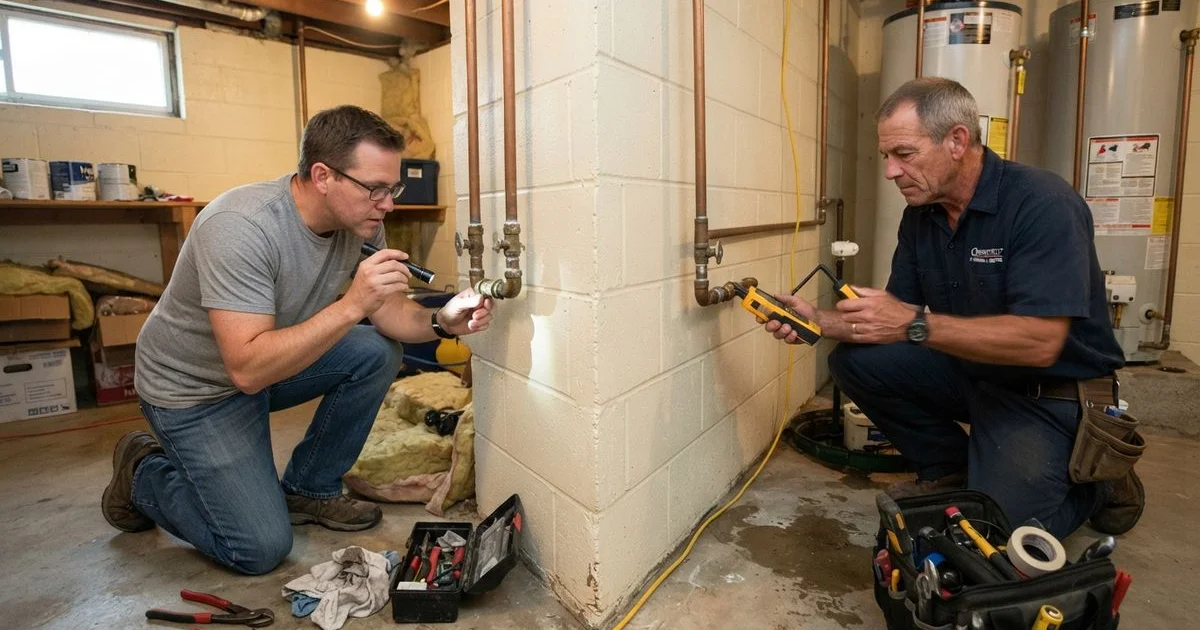
A suspected leak sits in an odd spot: you can often tell one exists before you have any idea where it is. Knowing which part of that problem you can solve yourself, and which part needs equipment, saves both time and unnecessary repair costs, and it keeps you from tearing into a wall on a guess that turns out wrong.
What you can check yourself
The water meter test. Turn off every fixture and appliance that uses water, note your meter reading, then wait a couple of hours without using any water and check it again. Movement in the reading means water is leaving the system somewhere, even if nothing is visibly wet.
Visual and listening checks. Look for damp spots on ceilings or walls, unexplained mold or musty smells, warped flooring, or a hissing sound near a wall when water isn’t running. Check visible plumbing under sinks and around the water heater for moisture or corrosion. A quiet house at night is actually a good time to listen, since background noise from appliances and traffic is at its lowest.
Your water bill. A noticeable jump in usage compared to prior months, without an obvious explanation like a new appliance or extra houseguests, is one of the more reliable early signs of a hidden leak. Keep a rough record of your monthly usage so a sudden jump is easy to spot rather than something you only notice months later.
Table: DIY vs professional
| Task | DIY reasonably handles it | Needs professional equipment |
|---|---|---|
| Confirming a leak exists | Yes, meter test | No |
| Spotting an obvious visible leak | Yes | No |
| Finding a leak behind a wall or under a slab | No | Yes, acoustic or thermal detection |
| Locating an underground line leak | No | Yes, specialized equipment |
| Confirming a leak is fully resolved after repair | Sometimes | Often, for hidden or recurring leaks |
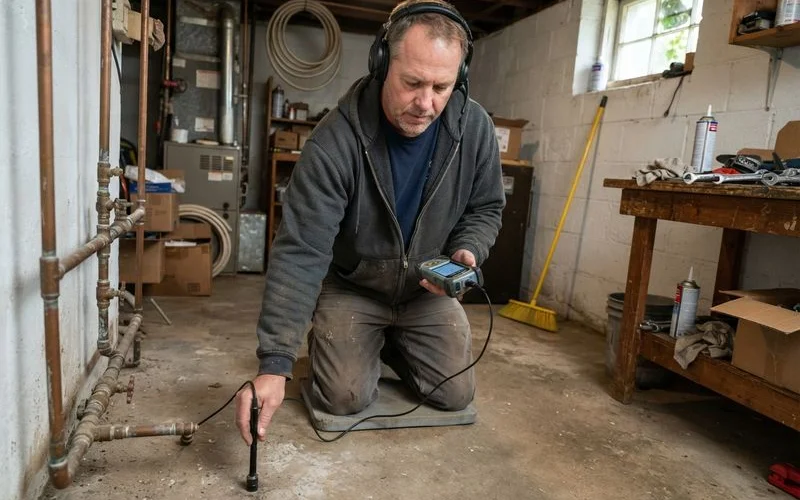
Where professional detection earns its cost
Once you’ve confirmed a leak exists but can’t see or hear it, guessing at the location by opening walls or flooring is expensive and often wrong. Professional leak detection uses acoustic listening equipment, thermal imaging, or pressure testing to pinpoint the source without unnecessary demolition. This matters most for leaks behind finished walls, under a slab foundation, or in an underground supply or sewer line, where DIY methods simply can’t reach.
The cost of professional detection is usually far less than the cost of opening the wrong section of wall, patching it, and still not having found the leak. For jobs like this, it’s worth thinking of the detection step as a separate, worthwhile expense rather than something to skip to save money upfront.
What a professional leak detection visit typically involves
A technician usually starts by narrowing down the general area using the same clues you might have noticed, a damp spot, a sound, a section of unusually warm or cool flooring, before bringing in equipment. Acoustic listening devices pick up the sound of water escaping under pressure, which can pinpoint a leak’s location surprisingly precisely even through a wall or slab. Thermal imaging can reveal temperature differences caused by escaping water, especially useful for a leak that hasn’t yet caused visible staining. Once the location is confirmed, they mark it clearly before any repair work begins, which keeps the actual fix targeted instead of exploratory.
Making the call
If your meter test confirms a leak and you can see or clearly hear where it is, a standard repair call may be all you need. If the source isn’t obvious after a reasonable look, don’t keep guessing, book a leak detection appointment before any repair work starts. Our directory can help you compare local providers, and this directory’s ranking method weighs how accurately and efficiently they diagnose problems, not just how they fix them once found.
The appointment itself follows a similar arc to any diagnostic plumbing visit; our guide on what to expect during a drain cleaning or sewer service visit walks through a comparable process for clogs and sewer lines.
FAQ
- How do I check for a hidden leak myself?
- Check your water meter reading, wait a couple of hours without using any water, then check it again. If the reading moved, water is leaving the system somewhere even if you can't see it.
- What can't I find with a DIY check?
- The meter test tells you a leak exists, but not where. Pinpointing the exact location, especially behind a wall, under a slab, or underground, generally requires acoustic or thermal equipment a homeowner doesn't have.
- Is a rising water bill always a sign of a leak?
- It's one of the most common signs, but not the only cause. Compare your usage to prior months and rule out obvious explanations, like a new appliance or extra household guests, before assuming a leak.
- How much does professional leak detection typically cost?
- It varies by method and how hard the leak is to locate, but the cost of pinpointing the source is usually far less than the cost of guessing wrong and opening up the wrong section of wall or floor.