Aging-in-place bathroom plumbing: what to consider for a safer bathroom
By Lena Vogel · Updated 2026-07-06
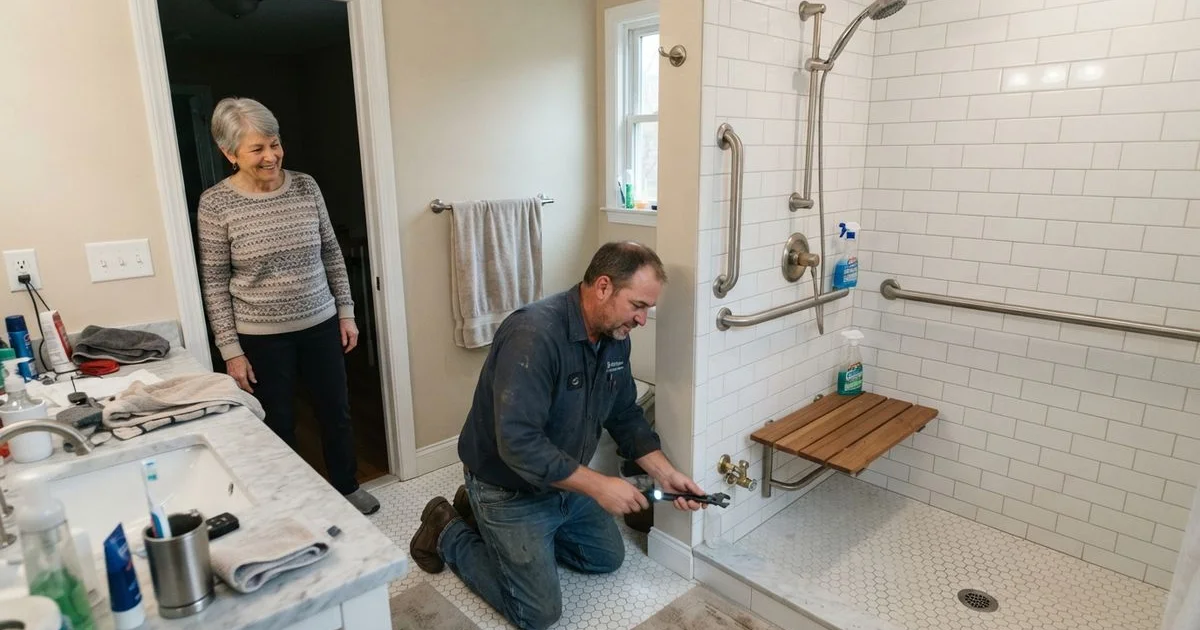
Helping a parent or family member stay safely in their own home often comes down to a handful of practical changes, and the bathroom is usually where it matters most.
Why the bathroom matters most
Bathrooms combine water, hard surfaces, and tight spaces, which makes them one of the most common places for a fall to happen at home. Many of the highest-impact changes are plumbing-related rather than purely cosmetic: how water enters the shower, how hot it can get, and how easy the space is to move through safely. These are also changes that tend to age well themselves, benefiting anyone in the household, not just the person the renovation was originally planned around.
Changes worth considering
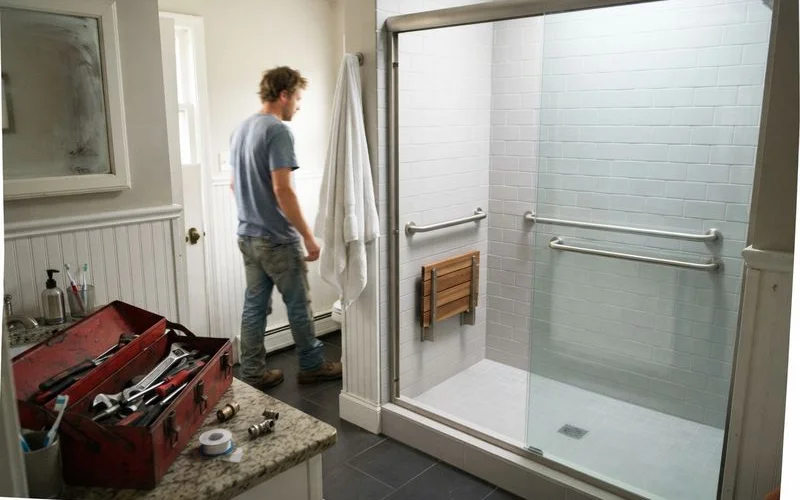
Curbless or low-threshold walk-in showers. Removing the step-over edge of a traditional tub reduces one of the most common fall points. This is a bigger project, since it involves reworking the drain and floor slope, but it’s often the highest-impact single change. A built-in bench and a non-slip surface are worth adding at the same time, since the plumbing and floor work are already open.
Anti-scald and pressure-balancing valves. These limit sudden temperature spikes, which matters if reaction time or temperature sensation has slowed. They’re a relatively contained plumbing upgrade compared to a full shower conversion.
Handheld showerheads and adjustable-height fixtures. These let someone shower seated or with less reaching and twisting, and they’re straightforward to add without a larger renovation.
Comfort-height toilets. A slightly taller toilet reduces strain on knees and hips when sitting or standing, a small change with a real daily impact.
Grab bar reinforcement. Grab bars need to anchor into solid blocking behind the wall, not just drywall, so this is worth planning alongside any other plumbing or wall work rather than as an afterthought. Retrofitting blocking after tile is already installed is far more disruptive than adding it during any other planned bathroom work.
Table: changes by project size
| Change | Project size | Plumbing involvement |
|---|---|---|
| Handheld showerhead | Small | Minimal |
| Anti-scald/pressure-balancing valve | Small to moderate | Moderate |
| Comfort-height toilet | Small to moderate | Moderate |
| Grab bar wall reinforcement | Small to moderate | Coordinated with wall work |
| Curbless walk-in shower conversion | Large | Significant, new drain and slope |
Signs it’s time to act
Hesitating at the tub edge, gripping the sink or towel bar for balance, or quietly avoiding showers altogether are practical signals worth taking seriously. Acting before an incident forces the decision usually means more choice in timeline, budget, and design than making the same changes after a fall.
Having the conversation
Bringing this up with a parent can be harder than the renovation itself. Framing it around comfort and convenience, a shower you can sit down in, water that never runs uncomfortably hot, rather than around aging or decline, often lands better and avoids the conversation feeling like a loss of independence. Involving your parent in choosing the specific fixtures and layout, rather than presenting a finished plan, tends to make the change feel like an upgrade they chose rather than one imposed on them.
Planning the project
Start with the changes that address the most immediate risk, often the anti-scald valve and shower access, before deciding whether a full bathroom remodel makes sense. Smaller changes can often happen quickly, while a full curbless shower conversion is worth planning around a broader bathroom or kitchen remodel timeline, since it involves more disruption to the space.
A plumber experienced with aging-in-place work can walk through what’s realistic for your specific bathroom layout and budget, and this directory’s ranking method can help you find one through our directory with a track record of this kind of careful, detail-oriented work.
FAQ
- What's the single most impactful change for bathroom safety?
- Converting a tub to a curbless or low-threshold walk-in shower is often the change with the biggest safety impact, since tub entry and exit is one of the most common places for a fall to happen.
- Are anti-scald valves worth adding even before other renovations?
- Yes, and they're a relatively small plumbing change compared to a full remodel. They limit water temperature spikes that can cause burns, which matters more for anyone with slower reaction time or reduced sensation.
- Do these changes require a full bathroom remodel?
- Not always. Some changes, like grab bar plumbing reinforcement or a handheld showerhead, can be added without a full renovation. A curbless shower conversion is a bigger project involving new plumbing and flooring.
- How do I know if my parent's bathroom needs these changes now?
- Watch for hesitation getting in or out of the tub, gripping the sink or towel bar for balance, or avoiding showers altogether. Those are practical signs worth acting on before an incident forces the decision.